
If you consider yourself an auto racing fan, or even an automobile enthusiast, you have probably had a discussion with a non-auto person who fails to see the attraction of the sport. It is also likely they fail to see the validity of the sport noting, in their view, it is merely a loud waste of time and fuel while being an environmentally destructive activity. These critics have rarely taken the time to research their opinion. They only look at the surface and apply a self-righteous set of values to come to these conclusions. They do not recognize production car advances taken from the racetrack. Vehicle safety, aerodynamic design, engine and transmission technology, braking applications and fuel economy all come from track testing and refinement on racing cars.
penskesaturn1That said, can we assume that knowledge, engineering and applications of building race cars from the ground up can directly translate to building production cars for the general public? We likely have our chance to find out. Roger Penske (Penske Racing) has signed on to take the Saturn brand from economically challenged General Motors. Penske is taking on a challenge but that is nothing really new. GM has failed the Saturn brand on several fronts leaving Penske open to rebuild the name as he sees fit. If he can keep cars running in NASCAR, INDY and GrandAm then this may seem like an easy win. He’s got a shot but not a guarantee.

General Motors launched Saturn in the mid 1980’s as a “different kind of car company”. Saturn quickly became a high ranker in consumer satisfaction. Their cars were attractive and held value. They were competing quite well with some of the imports know for economy and life span. So… what went wrong? You probably can not take one singular point as the problem but a high ranker could be the GM mindset of building one car with several labels. Saturns began to be built on the same platforms as other GM brands’ models. What was a “different kind of car company” became “the same car with a different badge”.

Enter Roger Penske. Anyone familiar with the Penske name will know he doesn’t jump without looking. It does not mean he never misses (Penske Car Care Centers…) but it does mean he sees something with potential. He has a deal with GM to basically supply Saturn models for the next couple of years. Penske will have to eventually set up or take over his own design and manufacturing facilities. Some current Saturn models are re-badged European models from Opel/Vauxhall. It has been rumored the Chinese are looking at the Opel label and it would seem unlikely that Penske would, with the facilities in place in the U.S., purchase a Chinese owned product just to drop his badge on it.

The questions remain and the answers may be some time in coming. Can Roger Penske succeed with Saturn? Will the Chinese take control of the Opel name which some of the Saturns are based on? Will Penske get control of manufacturing facilities inside the United States? What would a Penske design team put out to the American public? Will it continue to be “Saturn” or will we see a “Penske” brand take shape?

The answers to these questions will, hopefully, be very exciting for the American automotive public.
See Race Photos Here

Auto racing at 160+ mph is something to see. It is literally a flash of color and sound and wind chasing the wings as they go by. Combine these speeds with a short track setting such as Richmond International Raceway and you get a 5g vertigo festival. It is fun to watch and definately a bit different from a NASCAR Sprint Cup race on the same track. The lighter cars allow for quicker acceleration so the Indy cars shoot out of turns like rockets while NASCAR cars are thrown out of a turn on sheer power and momentum. Another noticeable difference is that the nature of NASCAR racing puts more cars in the same space and sheet metal is bound to get banged up while IRL cars are wide open with all four wheels exposed. While “rubbing is racing” is expected in NASCAR it can be a race ending disaster in IRL. Touching open wheels rotating at these speeds can send two cars in a dozen directions – including straight up. That seems to be frowned upon…

This past Saturday (June 27, 2009) the SunTrust Indy Challenge sped through 300 laps at Richmond International Raceway. With few cautions to shake things up, the race resembled a high speed parade for the majority of laps. It is difficult to pass at Richmond anyway and these cars are so evenly matched the chances at passing on the Richmond track only grow slimmer. The lead changes were mostly taken care of with pit strategy and pit stop speed more than ducking under the inside diving at speed into the turns. Dario Franchitti even apolgized to the fans after race making a mention of the lack of excitement on this particular race day.

All that aside, this race was fun to watch despite tha lack of two-wide turns and chasing through the field. The novelty of the design of these cars in an area known for closed cockpit, left side driving is one thing. The sheer speed, acceleration and quick braking is another. The personality of the race is different, too, but that is harder to put a finger on. Better to go see for yourself.

I found the race, the facility, the fans and the day to be thoroughly delightful from the point of view of a racing fan. My only dissapointment is the same I have at every auto race that does not have a Gordon or an Earnhardt in it. Where are the people. Go to any NASCAR track for a Sprint Cup race and the stands are crowded and the midway is busy. However, put a different kind of car on the same track and the fan response is much different. I’ve said it before. If you are a racing fan, be a “Racing” fan and support as much and as many types of racing as you can.

At the end of this one, Scott Dixon took the checkered in the Target Chip Ganassi #9 while team mate Franchitti rolled in the 2nd spot right behind him in the 10. Graham Rahal took 3rd, Hideki Mutoh was 4th and Danica Patrick grabbed another top 5 and 300 laps were done. Check out photos by clicking here.

picture from ANAVRIN on Flickr

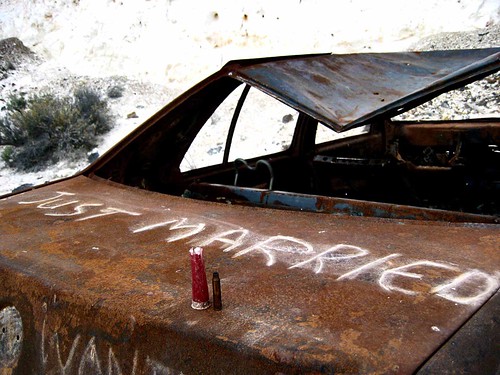
Well… They did it. After a long and unsteady courtship the two finally got married. It was widely speculated it would never happen. After all, both of them have very separate and distinct personalities. One is overbearing, controlling and has been known to be abusive. The other is narcissistic, headstrong and has been known to be uncultured and naive. There have been numerous accounts of infidelity on both sides and some of the confrontations have been legendary in the legal system.

Can a marriage such as this have any traction at all? Can Mr. Federal Government and Ms. American Auto Industry have any chance of a happy relationship? The prenup alone is nothing short of “War and Peace” with a “Gone With the Wind” forward.

Look at the wedding party! It is actually hard to tell who really has been married. The characters involved resemble a mass bigomist ceremony more than it does a union of two happy partners. Look at the Best Man, for example. The UAW has been the Fed’s best friend for many years while hopping in bed with the Auto Industry whenever there was a shiny trinket involved. He has played both sides to his advantage and Mr. and Mrs. Federal Auto seem oblivious to the pull-strings.

Bridesmaids… What a collection! Who would have thought there was that much chiffon in Detroit to cover the hides of these bloated cows? Bankers, accountants, managers… All of which have survived and grown fat on the spillings of the auto industry. They stood there bright and beaming as the favored few while many that were actually responsible for Auto’s successes were locked outside the church.

The wedding itself was even too bizarre for a “Saturday Night Live” sketch. After all, when the minister asks if there is anyone present who has a reason why these two should not be joined and everyone in attendance stands at once… shouldn’t there be at least some notice of the response? Aren’t the words supposed to be “I do” instead of “I’ll try” and “You better!” Is it strange to have the foreign gigolo and the groom sharing cake while the bride is kissing the Best Man?

However it went down on the wedding day it is now a vision for the future. But what future? Will it shape into a prosperous and fruitful relationship or be crushed by the weight of its own cost? The auto industry may have thought she would be getting a strong visionary partner able to look at the consumer and technological horizon and help her improve and grow as a viable business. What she got were more investment bankers.  Steven Rattner is the co-founder of private-equity firm Quadrangle Group LLC and is now chief adviser on auto-industry issues. Ron Bloom, a former vice president at investment bank Lazard Ltd., will advise Mr. Fed’s auto task force. How does that work? The auto industry has had their Big Day only to find out on the honeymoon the husband is impotent… and in debt… and probably always drives 5 below the speed limit.

This is a wedding in name only. In reality, it is an incestuous relationship involving the Federal Government, the UAW leadership and favored financial backers. The auto industry is being forced to wear the ring to make it all look legitimate. The “children” of this matrimonial nightmare will be the cars she is forced to produce. What these little bastards will be like is yet to be seen. The Fed is busy “genetically engineering” the design parameters to meet many arbitrary restrictions being demanded from the mistress that is politely referred to as the environmental lobby. In reality, this mistress is, at best, a manipulative child pouting every time it does not get its way. Disturbed that other people actually find joy in their automobiles, she has found a way to stop crying and start legislating through the manipulation of gullible politicians.

So how does a wedding such as this work? The bride is “kissless” on the honeymoon and has lost any sense of individuality. The groom entered the marriage with a mistress already pregnant. One married for money and the other for power. There is no money. Well, no money in the real sense of value. That leaves only power. And only one side has that card in their pocket.

Variety. The word describes the automotive fan as much as it does the cars they follow. NASCAR, Formula 1, Indy, Rally, Sports Cars, GT, Grand Prix…  and that is just a few of the racing series. That doesn’t begin to touch the thesaurus of general manufactured cars, modified or not, which draw people in. Lets not skip the customs and hot rods, the modified and the tame, which make people silly about the wheel. We’ve all been to a “car show” at some point. The problem with your typical car show is that it is crowded with cars. By that, I mean the cars are lined up side by side and some are surrounded by those rope things meant to keep you in line at the theatre. Yes – You see a lot of nice cars but they are static and surrounded. You can’t fully appreciate the cars because the many are all around distracting from the lines and curves of the the car in front of you. However, it is difficult to hold a “car show” where each vehicle has some space to be appreciated at its best… On the road, at speed, in a natural setting…

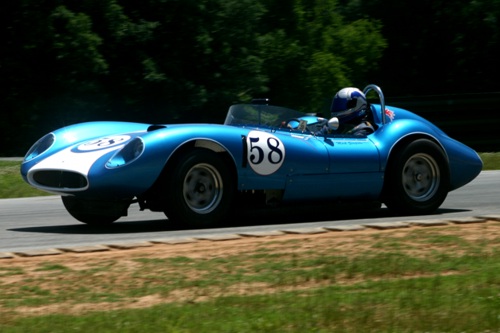
Mark Simpson in a '58 Scarab passing the Oak Tree turn at VIR

Unless you have access to a place like Virginia International Raceway.  June finds this paved jewel invaded by auto enthusiasts of all kinds bringing in some of the most beautiful car art ever built. The Heacock Classic Gold Cup features Morgans and MGs, Fort GTs and Ferraris, Porsches and Plymouths… and practically everything else! They are out in the open! They are on the track at speed! In other words – These cars appear in their natural habitat and definately NOT as a static display.

These are the cars you may only see on television or in a magazine. If you are like me (a working slob) then you don’t have the liquid cash to own one. However, on this weekend in June, you can come out to VIR when the people that do have the bank to own them bring them out for all of us to enjoy. Many of these cars represent the golden age of the car and motorsport. With graceful lines, powerful engines and exotic design, these cars turn the pavement of VIR into art in motion. It is something to see. Mark your calendar and don’t miss it again. It is an art gallery on wheels for any fan of motorsport. Check this gallery for a glimpse of the fun!

obamanotpay1Today new standards were set for fuel economy along with forthcoming national emissions standards for new vehicles by 2016. The target for a manufacturer fleet average is 35.5 mpg. Passenger vehicles are expected to reach 39mpg while trucks are set at around 30mpg. By 2016…? Did you see the date? 2016… Six years from now. My first question is… Why Wait? Why color this green appeasement with anything that even resembles a promise for the future? It is obvious we have the technology to build these cars now. To be clear, I am purposefully excluding hybrids in the mix of current technology and mpg possibilities. Hybrids are still very new technology. The effects on the environment have not been measured correctly and they have not been around long enough to show any real figures on dependability.
That leaves only combustion engine vehicles for review of mpg possibilities. We’ve been building 40+ mpg cars for some time. The 1991 Honda Civic CRX got and average of 45mpg and it was fun, quick and dependable. Early Saturns were hitting the high 30s. Nissan and Toyota were already hitting this mark in the early to mid ’90s. Even “performance” cars are capable of hitting the upper 20s to low 30s with six and eight cylinder engines. The hold up is not the combustion engine technology. The timetable is there to allow time to “soft sell” Americans into further believing that we will all die of sun poisoning unless we park our butts inside these vehicles the auto manufacturers will be forced to build.

Make no mistake (beyond the one that was made in November of 2008). This has nothing to do with foreign oil dependency. This has everything to do with just oil, period. If it was about foreign oil dependency, we would be drilling within our own borders. We would be building new refineries. Instead, we are setting in motion a pipe dream of “green energy” job creation which can’t even begin until there is an infrastructure of businesses with the capacity to sustain itself. Where are these “green” businesses? If they are so keen on expanding their product (and workforce to produce it) why are we still bleeding out jobs? Why haven’t they stepped up and brought these newly jobless in? The answer is simple. The jobs aren’t there because the “green” energy product does not have the resource to expand at the rate needed to counter current unemployment. Any jobs created in the “green” sector will not be created by simply saying so. In the mean time, we need fuel now. And as long as we need fuel now, we will continue to get it from where it is available. The promise of “green” energy jobs does two things. It appeases the “climate change” crowd by promising renewable energy (deliverable or not. The promise is all that is required) and, most importantly, by not allowing drilling within our borders. The latter is the key. Green agenda nuts are unconcerned with the economy, the free market, the sustainable growth of the United States or anything that obstructs their view of setting standards attempting to force us all into their narrow view of what human life should be.

Take the blinders off. Take a peek under the curtain. You are being lied to. A recent Administration memo so much as said so. CO2 memo

President Obama says these new cars will save “billions” of barrels of oil and cost Americans about $1,300 more per vehicle by 2016. Where do these figures come from? What is the baseline for making these predictions? He also makes the claim the fuel costs savings by having higher mpg vehicles will return that $1300 back to the consumer over time. Again, how does he know what fuel will cost in 2016? How does he even know these “new” vehicles will only cost an additional $1300? Even so, is that $1300 more than a current Ford Fusion or a Chevrolet Aveo? Until the baseline numbers these “predictions” are based on are made public and verifiable, these are just empty words from a President who has become famous for promising everything with no real consequence in offering nothing.

He is counting on you not to peek under the curtain. He is counting on you to simply nod your head and go back to watching “American Idol”. He is counting on you to not question and not look beyond the presentation. He isn’t lieing. He isn’t telling the truth. He is simply saying nothing at all.

An internal memo from the Obama administration (Office of Management and Budget ) may put a lid on “cap & trade” legislation for a while. “Cap and Trade” is a regulation method which forces additional costs onto businesses and power generation facilities for their emissions beyond a set point. Those additional costs (taxes) would then be shuffled by the Federal Government into other areas, specifically, the research of so-called “renewable” energy sources.

Never mind that many of these “renewable” energy sources are already being explored by the private sector and many of the power and fuel companies that would be targeted are deeply involved in the research. Never mind that “cap and Trade” costs would be passed onto the consumer, raising energy and fuel costs at the retail end placing an even higher burden on a struggling economy. Never mind that the entire process is being driven by a government that has swallowed steroids for regulatory growth and expanded government dependency.

Now, an internal memo about CO2, the EPA and the questionable science behind it has surfaced. This memo mentions politically driven motives above science, questions the premise of hazardous CO2 and lifts the hood on the entire debate of CO2, human-caused climate change and political power grabs. Face it. If there is a viable question about the validity of CO2 hazards put forth by a government with an agenda, then it only follows that many of the “facts” we’re being subjected to by the “green” government and a media sympathetic to those goals is also suspect.

A great read on this memo, video from the government committee meeting which references it and more “caught in the headlights” fun is online here: wattsupwiththat

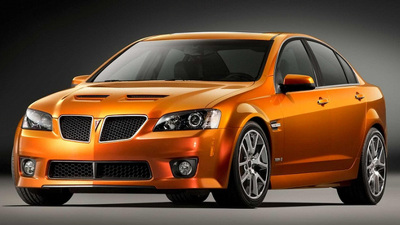
pontiac_logoThe Pontiac brand is being put out by General Motors. Is this a move of logic by General Motors or is this a pressure move from the Federal Government which stands to take over more than 50% of GM stock in cancelling a chunk of bailout debt? Pontiac is a “performance” brand name with a history of muscle cars, sports cars and racing heritage. The current administration is certainly waist deep in “green” cohorts and may not want to have a controlling interest in a brand known for burning rubber and turning fast laps. Is Pontiac really losing money or is it a show of “green” power? Currently, Pontiac power plants and car models are running and winning on the track. Just recently at Virginia International Raceway, a Pontiac powered Daytona Prototype won the class in the Bosch Engineering 250. On the same track running with the DP class, a Pontiac GXP.R won the GT class. Pontiacs are selling. They are out on the road with their split grills and diamond point logos. So the question remains…  are they really losing so much on the showroom floor? More so than other brands…?  Really?
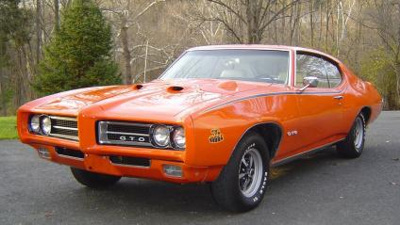
1969 Pontiac GTO "The Judge"

The historic Pontiac GTO has been a staple of muscle cars since it was introduced. Now, General Motors is ready to throw it in the ditch and keep Chevrolet, GMC, Cadillac and Buick. Buick!? Are you kidding? Think… Can you remember the last time you saw a Buick on the road? What is it that says keeping Buick and dropping Pontiac makes sense? Is the bottom line on Buick really so fantastic? Is the bottom line on Pontiac really so dismal? Is this a “business” decision or is this a mandate from a government being lead by a man who was driving a Chrysler 300 up to the point he announced a campaign and politically embraced “climate change” verbage with the purchase of a hybrid to show how “green” he could appear to be?

2009 Pontiac G8 GXP
2009 Pontiac G8 GXP

Pontiac is not the only brand in line with the scrap yard. Hummer is on the list. Why anyone wanted one of these toned-down military knock-offs in the first place was amazing. They make Pontiac look “green” as country meadow! Saturn is on the list to go. Really? Saturns have a pretty good reputation for dependability and economy so why would they be out there on a limb? Saab is GM owned but they don’t want it any longer. Saab has always been a niche luxury sports car with a loyal, but smaller, following. Saab has, however, made some good moves with styling and performance but perhaps was too little, too late.

The questions concerning Pontiac just scratch the surface. The economic turn down has made the magnifying glass turn on every aspect of modern business. Larger questions remain. Right now, as things stand to continue to go downhill or could swing towards growth, a large question concerns trust. How much do we trust those that are telling us things are bad and drastic measures must be taken? How much do we know about the coincidence of chopping performance cars off just as those that push the “green” agenda gain access to those in power? How much is real and how much is manufactured? Time will tell. When it does will we realize we’ve been duped or saved?